
Images and Figures
Results View
In Results view, figures are shown by default in the “Extended list” view. Figures may also be viewed by editing a custom view and show Figures with any other subset of fields available to them. This gives the potential to quickly scroll though thumbnails of figures for an entire set of results from a given query. Results view shows the first 5 thumbnails followed by an option to click through to view all figures.
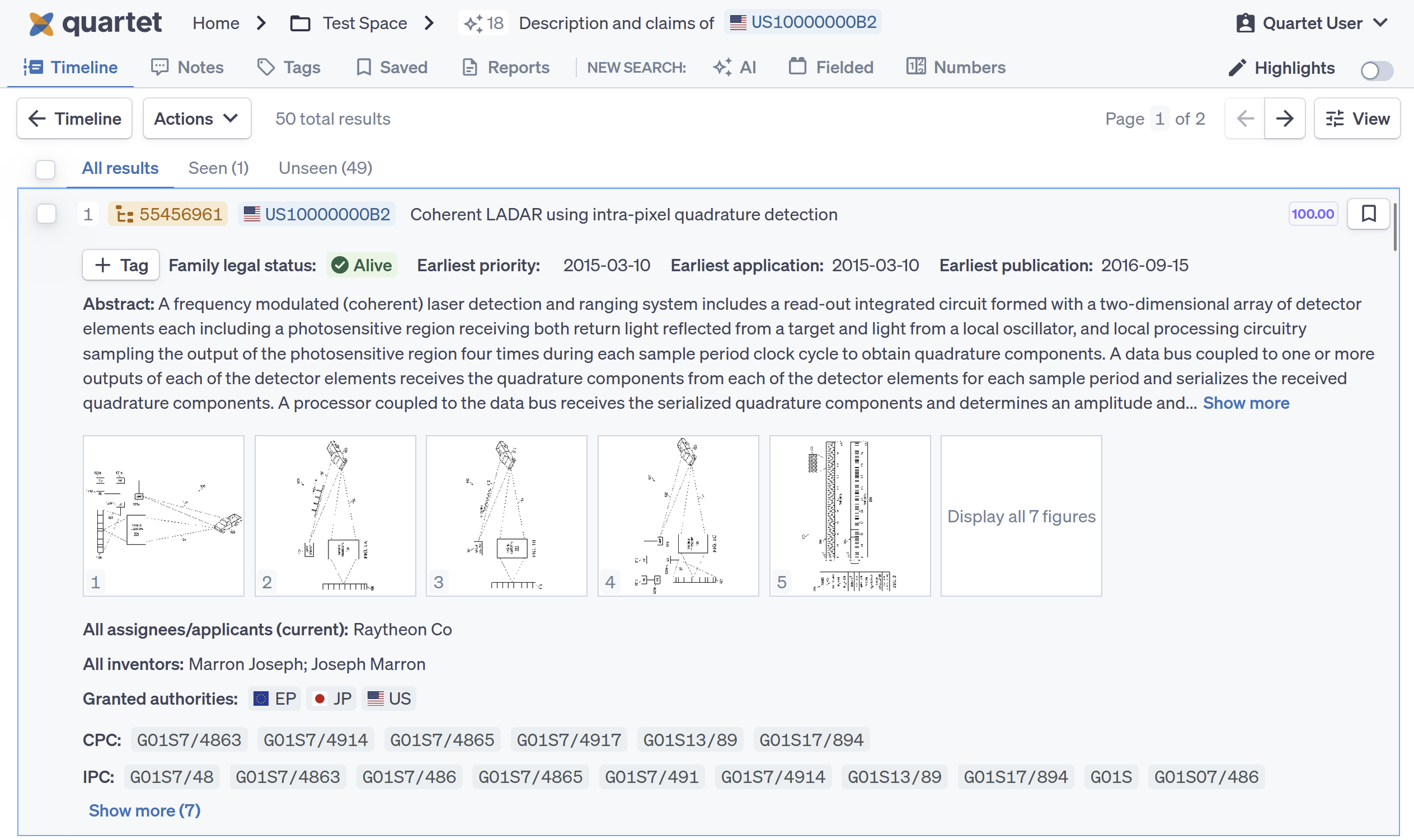
Clicking on “Display all # figures” in Results view opens the figure pop up lightbox. More on the figure pop up will be discussed later in this article.
Detail View
Detail view provides additional ways to review Figures.
The center pane shows thumbnails of all figures instead of just the first 5 from Results view. The thumbnails are resizable with a slider.
The thumbnails can also be resized using the minus (-) and plus (+) hotkeys. Note that the system will accept equals (=) as an equivalent hotkey for plus (+) to remove the need to hit shift and equals (=).
Clicking on the thumbnails will bring that figure up in the right side pane.
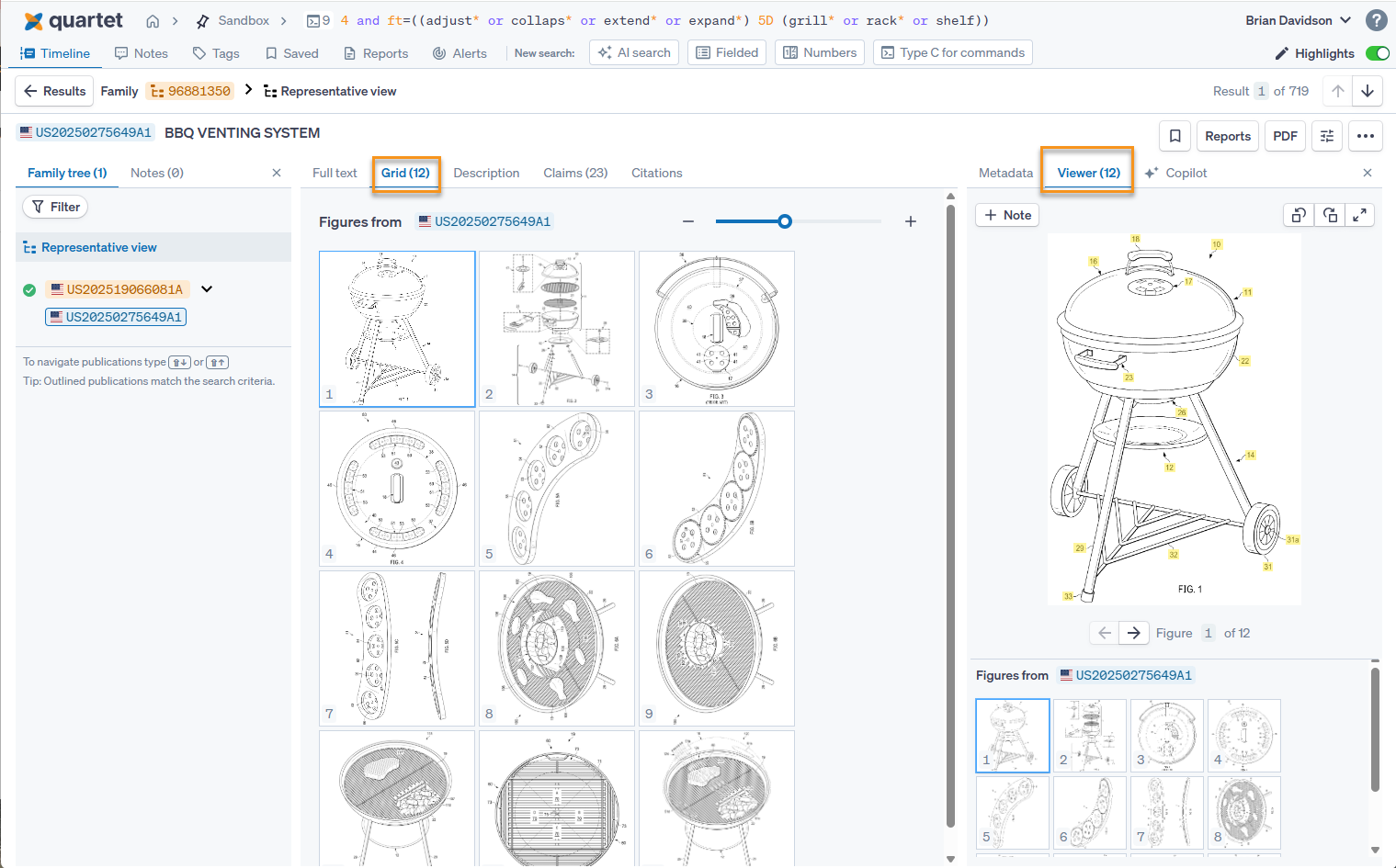
The right pane has a “Metadata” and a “Viewer” tab. The “Grid” tab allows for viewing figures while concurrently referencing full text of the document in the left pane. The right pane “Viewer” tab has a thumbnail strip at the bottom of the panel that allows for navigating to specific figures by clicking on the corresponding thumbnail. Figures can also navigated sequentially using left and right arrows as hotkeys. Note that the thumbnails are numbered as a convenience and may not match the actual figure numbers in the document.
The thumbnail strip in the right pane can be dragged and resized to show more or fewer rows of thumbnails. The main large figure in the right pane fills the vertical space above the thumbnail strip and automatically resizes based on the vertical height of the thumbnail strip.
The right pane has two rotation buttons 
In some figures, certain element numbers are highlighted in yellow. The corresponding element name from the text of the publication will be shown upon hovering over the highlighted element numbers.
Figure Popup
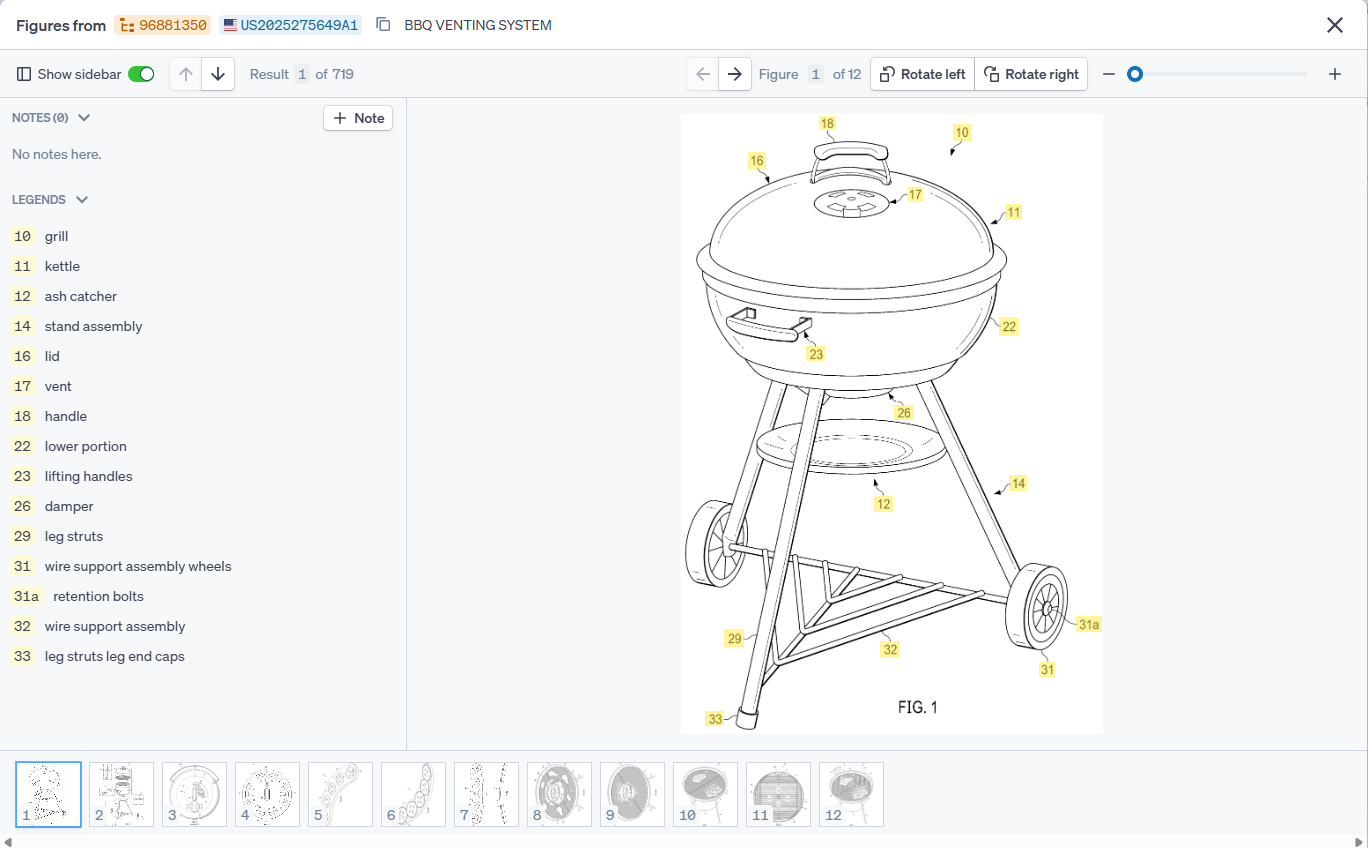
Next to the “Rotation” button is an “Expand”  button that brings up a “Figure Popup” box. The Figure Popup box can also be accessed by double clicking a thumbnail in either pane or hitting the space bar hotkey. Note that the space bar hotkey only works when at least one of the Figures tabs in either pane is selected.
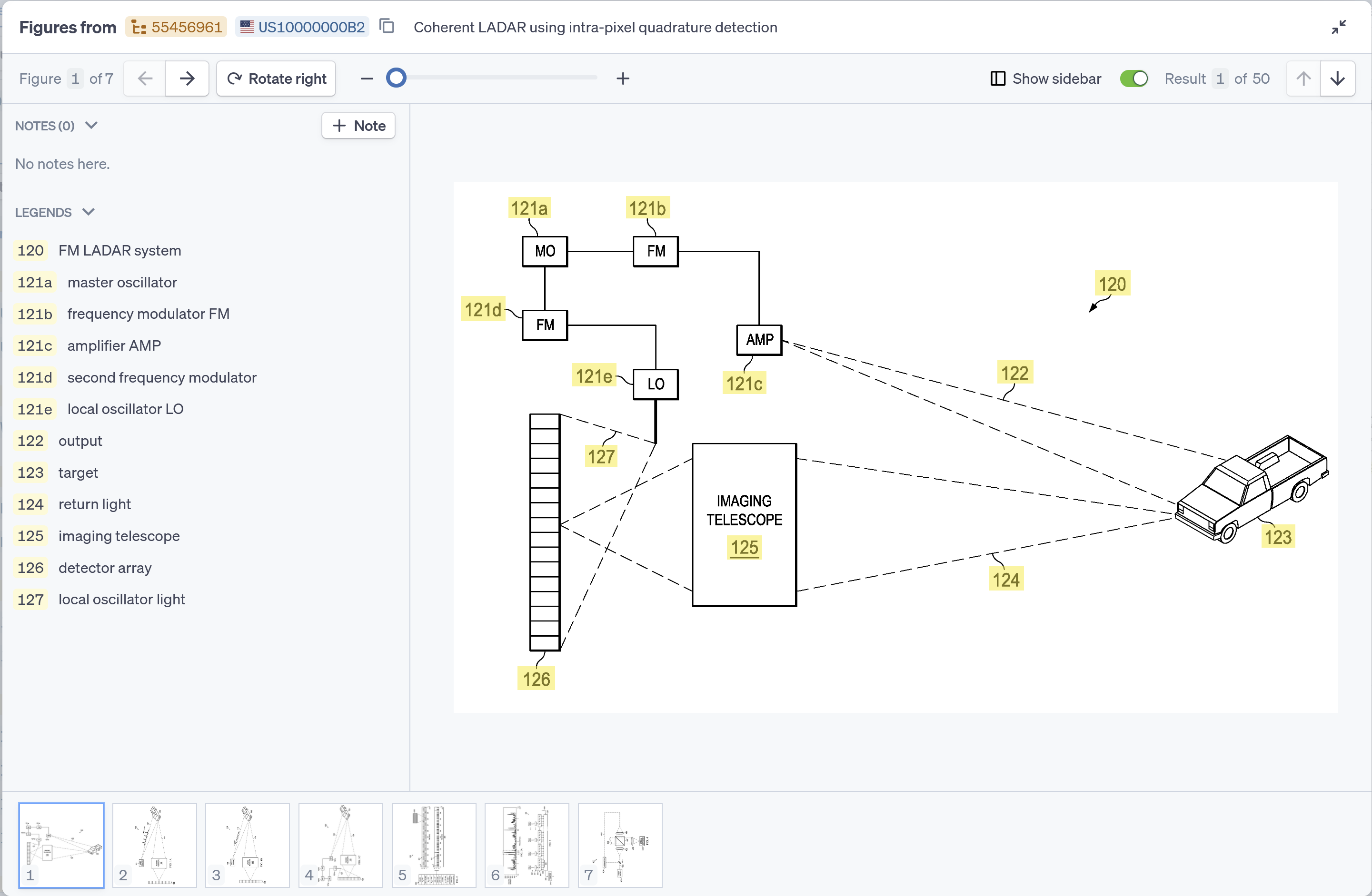
The “Figure Popup” provides an even larger view of the figures and allows the ability to zoom into the figures to view specific details in figures if necessary. The “Figure Popup” includes the same navigation features as the right pane. In the “Figure Popup”, up and down arrows in the upper right corner or up and down hotkeys can be used to scroll through documents of a result set similar to how one would navigate through results in Representative view.
Similar to the right pane in “Results” view, the “Figure Popup” highlights element numbers in the figures which when hovered over shows the associated element name from the publication text. In addition to hovering over the element numbers, the legends my be toggled off or on. When toggled on, the legends will show a list of element numbers and the associated element names. Hovering over an element in the legends and the element in the figure will then highlight in blue to show where this element exists in the figure.